
Would Your Story Make a Compelling Documentary?

Updated: Jul 13
This is often the most important question I discuss with clients in our initial meetings, and the right question to ask before any production decisions are made.
Not every organization has a story that belongs on film. Some do. Some have stories so compelling—and so poorly understood—that a documentary may be the most effective way to bring them to life. The first step is discovering whether your organization has the kind of story that can engage an audience emotionally and sustain a compelling narrative.
To help with exactly this question, I offer a free guide on my website called Finding Your Story, which we'll discuss in more detail at the end of this blog. It walks any organization through the essential story-evaluation questions before any production decisions are made. But first, what follows is a summary of relevant considerations.
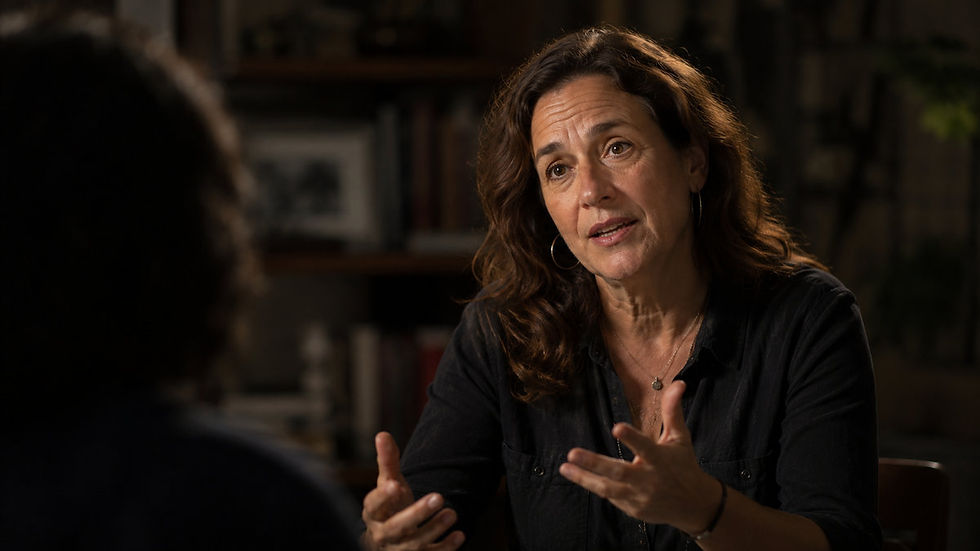
What Makes a Story Worth Turning Into a Documentary?
Most organizations, when asked to describe their story, describe their accomplishments. The programs they run. The awards they have won. The number of people they have served. That's not a story. That is a resume.
Contrast that with a film I produced for the Greater Fort Lauderdale tourism bureau. They could have made a film about their budget, their attractions, their annual visitor numbers. Instead, they partnered with the Jack and Jill Late Stage Cancer Foundation, which had connected them with a Midwest mother raising two children alone while facing terminal cancer. The tourism bureau rallied the local business community to give the family a week they would never forget: private car service, a luxury hotel stay, an airboat tour through the Everglades, parasailing, and a string of the city's best restaurants, all donated. The resulting film wasn't about Fort Lauderdale's amenities. It was about a community that came together to create unforgettable memories for a mother and her children during one of the most difficult times in their lives. In doing so, it revealed something no brochure ever could: that Fort Lauderdale is more than a beautiful destination—it is a community with a heart.
The structure required for a complete story includes a character facing a challenge with meaningful stakes, something genuinely at risk. Their struggle leads to transformation and, ultimately, a resolution that feels earned. These elements reflect the journeys we all experience in our own lives, which is why audiences respond to them so deeply. They transform a film from a collection of facts into a vicarious experience that lingers long after the film ends. Without these elements, you have content. You do not yet have a story.
Why Great Documentaries Follow Timeless Storytelling Principles
Through a lifetime of studying mythology and storytelling traditions, Joseph Campbell identified a narrative pattern he called the Hero's Journey, tracing its roots through myths and epics spanning thousands of years. At its heart is a simple structure: someone faces a challenge, is transformed by the experience, and emerges changed. Directors such as George Lucas have acknowledged Campbell's influence on their work, and that same narrative pattern now appears throughout films, television, literature, and even advertising. Audiences have experienced this story form for so long that it has become part of what they expect from a film. When it is absent, a story can feel incomplete. When an organization's authentic story naturally follows this arc, it creates an emotional connection that facts and information alone rarely achieve.
The First Question I Ask Every Documentary Client
When I sit down with a potential client, I am listening for one thing above all else: the moment they tell me about a real person whose life was genuinely affected by what their organization does. Not a demographic. Not a category. A specific human being.
When that person appears in the conversation, I know we have a story. When the conversation stays abstract, we have more work to do.
I learned this firsthand with a client named Carl Rosner, a Holocaust survivor whose superconducting magnet research at General Electric helped make the MRI possible. He had gone on to develop a new cardiac imaging technology, more accurate than anything else on the market, and was raising fifty million dollars to bring it to market. A board member introduced us. Carl was skeptical. He said, I have a white paper, what do I need a film for? I asked him: How many people have read your white paper?
That conversation was the turning point, because Carl and I started talking about who could appear in the film and carry a meaningful message to our audience. We focused not on the product itself but on the impact it could have by saving lives. We eventually built a list of eight people to interview whose lives intersected with heart disease in ways that mattered, people who understood the stakes of this technology not as an abstraction but from personal experience. That was the moment I knew we had a film. Not one person's story, but eight, each carrying their own experience of what this technology could mean.
Heart disease is the leading killer in America. I interviewed people in five cities from Boston to Florida and sent Carl links to review as we went. As the film came together, Carl, once skeptical, was calling daily during the edit with notes, fully invested in a story he hadn't known was there. When it was finished, he was so pleased that he gave me a sizable bonus.
Carl started with a white paper. But it was the stories of eight people that made the case our film needed, one no document ever could.
To find the heart of your story, focus on how people are impacted on a personal level. The most powerful documentaries are almost always built around a personal journey through a challenge that audiences recognize as universal. It might be a visitor who came to your destination and discovered something they had been searching for. A museum guest who stood before an exhibit and suddenly saw their own history in a new light. A participant who entered your program one person and left transformed. That is where your film lives.
Why Authenticity Is Essential to Every Great Documentary
There is another test, and it is less comfortable to apply. Is your organization willing to tell a true story, including the difficult truth?
The documentaries that move audiences are honest. They show difficulty alongside triumph. They show the challenge, not just the resolution. Organizations that want only to show their best face on film tend to produce films that feel like promotional material, because that is what they are.
I faced this directly while making a recent feature length documentary about Madeira, a film covering six hundred years of the island's history and its outsized influence on the world. Madeira was where the plantation system was first developed for growing sugarcane, and the Portuguese were among the earliest to pair that system with African slave labor, a model that would go on to shape the trans-Atlantic slave trade for centuries, ultimately affecting millions of lives, with consequences that still echo in marginalized communities around the world today.
Some people involved in the project questioned whether that history belonged in the film at all. It was ugly, and Madeira had so much else worth celebrating. But leaving it out would not have made the film more positive. It would have made it false. A film that quietly skips over the parts of a story that are hard to look at is not really a documentary anymore, it is a promotional piece dressed up as a documentary.
The most effective branded documentaries are the ones where the client was willing to let the story breathe. Where the challenge was real and the outcome was earned rather than assumed. Audiences feel the difference immediately.
Next Steps for Your Documentary Project
If this article raises questions about your own situation, working through my guide, Finding Your Story, may be a useful next step. Available free at jdfreedman.net, it is designed to help organizations think through the same story, audience, and production questions I discuss with clients during the early stages of a production.
If, after reviewing the guide and completing its interactive worksheet, you would like to discuss what you discovered, you are welcome to share your results and schedule a complimentary thirty-minute consultation.
No obligation. Just an opportunity to run your ideas past someone who's been down this path before.
Comments